
News News Official
Drunken Goddess Reflux Cancels Steam Demo Over Fears AI Copycats Could Launch First
Drunken Goddess Reflux will no longer offer its planned public Steam demo on October 19. In an official announcement published October 16, 2026, the developers said they feared AI or other tools could be used to quickly reproduce the game's presentation and mechanics, potentially allowing an imitation to launch before the original. The team will instead organize controlled online play sessions for a limited number of participants.
 By Kader Drunken Goddess Reflux
A Public Demo Canceled Just Three Days Before Launch
For a small developer, a Steam demo can be the moment when an unfamiliar project finally reaches a broader audience.
Players discover its mechanics, content creators showcase early gameplay and the development team gathers feedback.
Drunken Goddess Reflux had planned to follow that familiar approach.
Alliance Arts and WHO YOU scheduled a public demo for Monday, October 19, around the start of Steam Next Fest.
However, on October 16, the team announced that the demo would no longer be released publicly.
The developers apologized to players who had been looking forward to trying it.
This is an officially confirmed change rather than speculation about a possible delay.
Why Are the Developers Concerned About AI?
The announcement identifies two related but distinct reasons.
First, the team originally intended to distribute a public demo while imposing restrictions on recording, posting and streaming gameplay.
The developers concluded that they currently lacked the ability to manage and enforce those restrictions properly.
Second, they fear that outside developers could study the demo and quickly recreate its presentation or gameplay through AI-assisted development or other tools.
Their concern is that an imitation might reach the market before the original game.
That possibility could be particularly damaging for a small team hoping to establish a recognizable identity.
However, the announcement does not identify a confirmed existing clone.
It describes an anticipated risk, not an established case of stolen source code.
A Supernatural Drinking-Roulette Game
Drunken Goddess Reflux has an unusual premise.
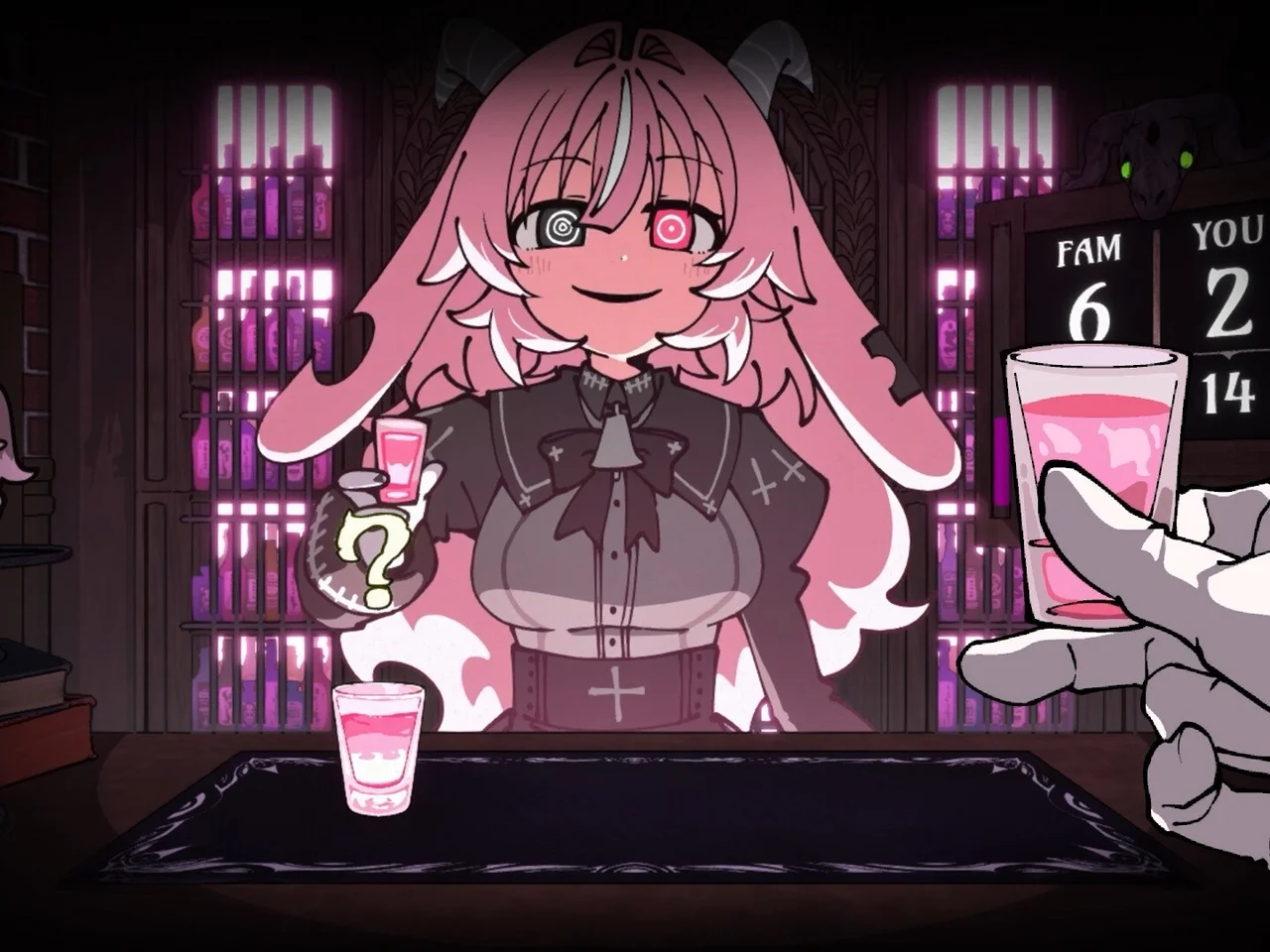
Players enter Pandemonium, an infernal bar inhabited by Femme Soule, a mischievous demon with a distinctive visual design.
The encounter becomes a strange roulette contest built around glasses, uncertain outcomes and changing rules.
Players must manage risks while using special tricks to influence the competition.
The aim is to survive the fictional contest and defeat the demon at her own game.
Its visual presentation combines anime-inspired character animation, gothic surroundings, dark humor and an expressive pink-and-purple palette.
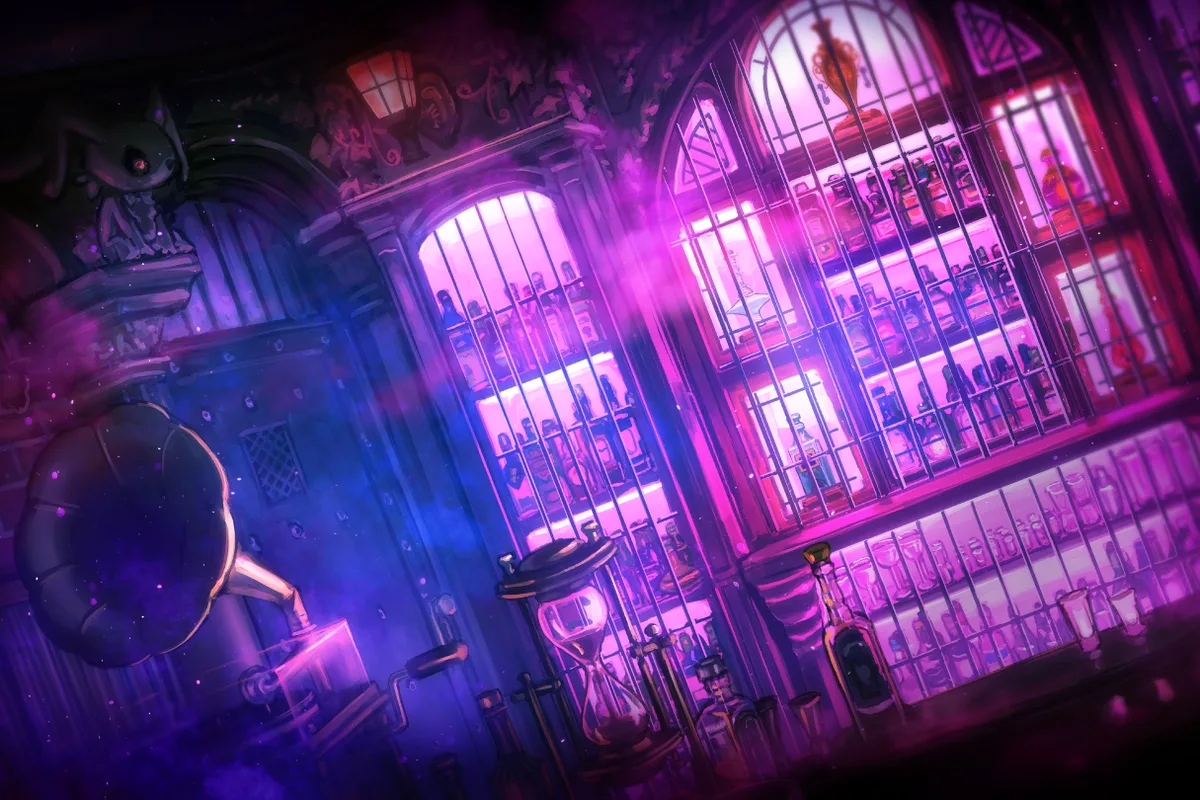
The game's identity depends on how those elements work together.
That combination of character design, interface and unusual mechanics is exactly what the developers want to protect before release.
How Will the Closed Sessions Work?
Canceling the public demo does not mean no one will be allowed to play.
Alliance Arts plans to host closed online sessions for a limited number of participants.
Applications are being handled through the official Discord server.
Applicants must review and accept participation conditions, including restrictions on publishing and streaming gameplay footage.
Participants will then be selected through a lottery.
The developers intend to collect impressions and feedback on Discord after the sessions.
The exact number of places and session dates have not been confirmed in the examined announcement.
This is therefore not an open beta, and applying does not guarantee access.
More Control Comes at the Cost of Visibility
The approach offers one obvious benefit: developers can identify participants and communicate restrictions before providing access.
However, it also creates a significant trade-off.
A public demo allows curious players to discover a game without applying or waiting for a selection process.
Content creators can also introduce smaller titles to audiences that might never encounter their store pages.
By replacing open access with closed sessions, Alliance Arts is reducing the immediate reach of its playable preview.
The decision reflects a belief that protecting the game's identity is worth that sacrifice.
Its commercial effectiveness has not yet been established.
Imitating Gameplay Is Not the Same as Stealing Code
The developers' concerns involve both presentation and mechanics.
Recreating a similar visual style is not necessarily the same as building a functioning imitation of a game's systems.
Likewise, a new game may employ similar concepts without directly reusing another developer's protected assets.
Several different issues therefore need to remain separate: commercial imitation, unauthorized copying, use of AI tools and the speed of development.
The official statement specifically mentions AI alongside other technologies.
It does not claim that an AI system has already obtained or stolen the project's source code.
A December Release Was Announced, but Steam Shows No Date
Alliance Arts and WHO YOU initially announced December 8, 2026, as the game's PC release date.
Gematsu covered that announcement on October 8.
However, the currently accessible Steam listing displays a release date that has yet to be determined.
The original announcement and the current store listing therefore need to be distinguished.
Canceling the demo does not by itself establish that the full game has been delayed.
The October 16 statement does not provide a revised launch date.
Players Are Divided Over the Decision
Community discussions reflect the difficult balance involved.
Some players understand why a small studio might fear opportunistic competition before releasing its own work.
Others argue that a public demo and the videos associated with it are valuable promotional tools.
Both concerns have merit.
Open access can introduce a game to a new audience while also giving imitators a closer look at its mechanics.
However, no verified evidence currently establishes whether canceling the demo will prevent imitation or meaningfully affect sales.
The next useful indication will be how the developers manage closed testing and communicate feedback afterward.
A Difficult Time to Promote an Independent Game
Drunken Goddess Reflux may be a bizarre supernatural contest set inside a demonic bar, but its developers face a very practical dilemma.
Independent studios need to show their work to compete for attention.
Yet providing early access can also reveal exactly how a distinctive concept works.
Alliance Arts and WHO YOU have chosen to limit playable access temporarily.
The Steam listing remains available, official imagery is still public and the game is still planned for release.
What has disappeared is the opportunity for every interested player to try an unrestricted public demo.
The team hopes this approach will help it stay ahead of potential imitators. Whether that protection outweighs the loss of exposure remains an open question.