
News News Official
PS5 Emulation Takes Another Step as Unofficial PS2 Disc Support Gets a Major Update
Insert an old PlayStation 2 DVD into a PS5 and see the game appear on the console's home screen. That is now one of the capabilities offered by PS5SX2, a community-developed emulator that continues to evolve rapidly. On October 19, 2026, developer Swordpdf released version 2.15 with improvements to performance, usability and presentation. However, one major limitation remains: the software is not available on an ordinary, unmodified PS5.
 By Maëlle
Another Step for PS5SX2
PlayStation 5 officially supports a substantial portion of the PlayStation 4 library.
Original PlayStation 2 discs are a different matter. Sony does not provide direct support for playing them through the console's optical drive.
The homebrew community has been exploring that gap.
PS5SX2 is a port of PCSX2, the established PlayStation 2 emulator for computers.
Rather than streaming a game from an external PC, it performs emulation directly on modified PS5 hardware.
Developer Swordpdf released version 2.15 on October 19.
The project remains experimental, but development has continued at a remarkable pace.
Games Can Appear on the PS5 Home Screen
One of the most useful features concerns the console interface.
Since version 2.10, inserting a compatible PS2 DVD can create a home screen tile showing the game's title and cover artwork.
Players can select that tile to launch the game through the emulator.
Version 2.15 expands similar functionality to games already stored in the PS5SX2 library.
Individual shortcuts can now be created without opening the emulator's main menu every time.
The feature must be enabled through its settings.
This makes the experience resemble launching a conventional installed game.
However, it does not imply any official Sony recognition or support.
Disc Reading Becomes More Consistent
Version 2.15 also improves optical disc access.
The emulator can read data ahead of time to reduce interruptions during gameplay.
The developer has adjusted the PS5 drive's operating behavior.
These changes target a practical problem: some games frequently request information from physical media.
If the emulator must wait too long, loading pauses or stuttering may occur.
The revised system aims to reduce those interruptions.
However, it does not guarantee flawless performance across the entire PS2 library.
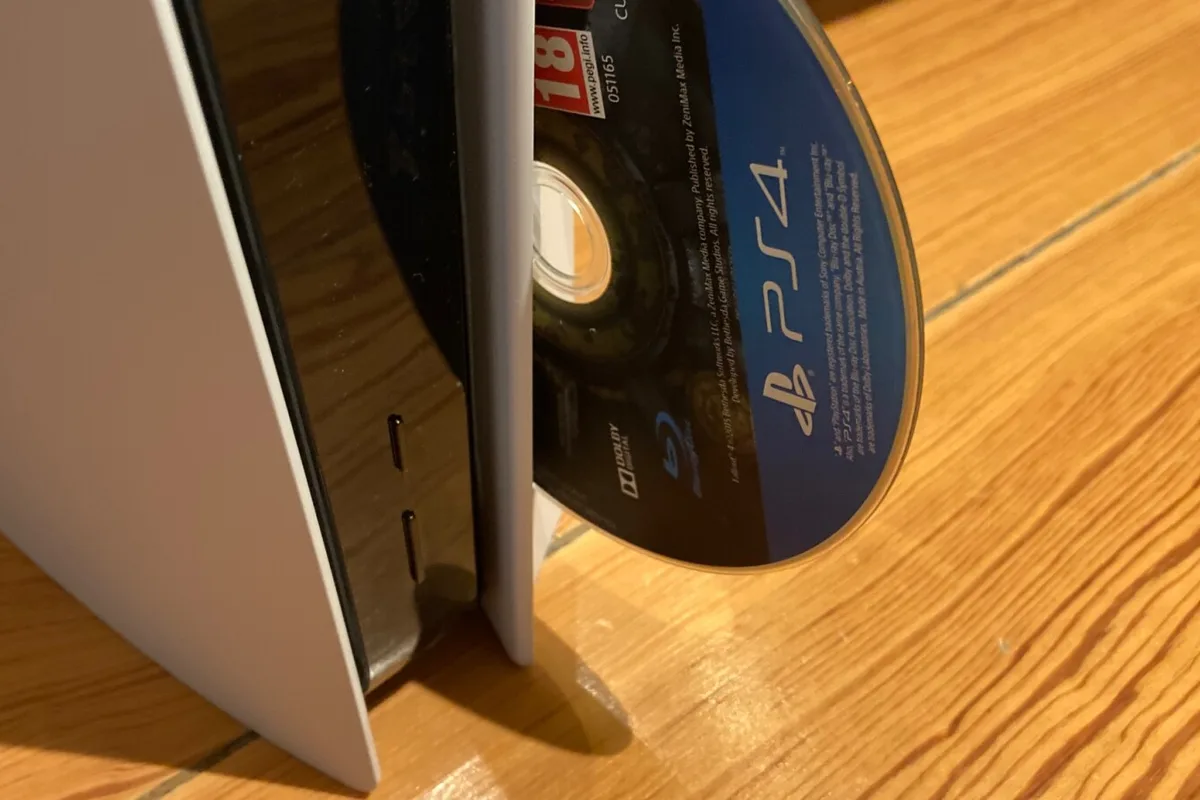
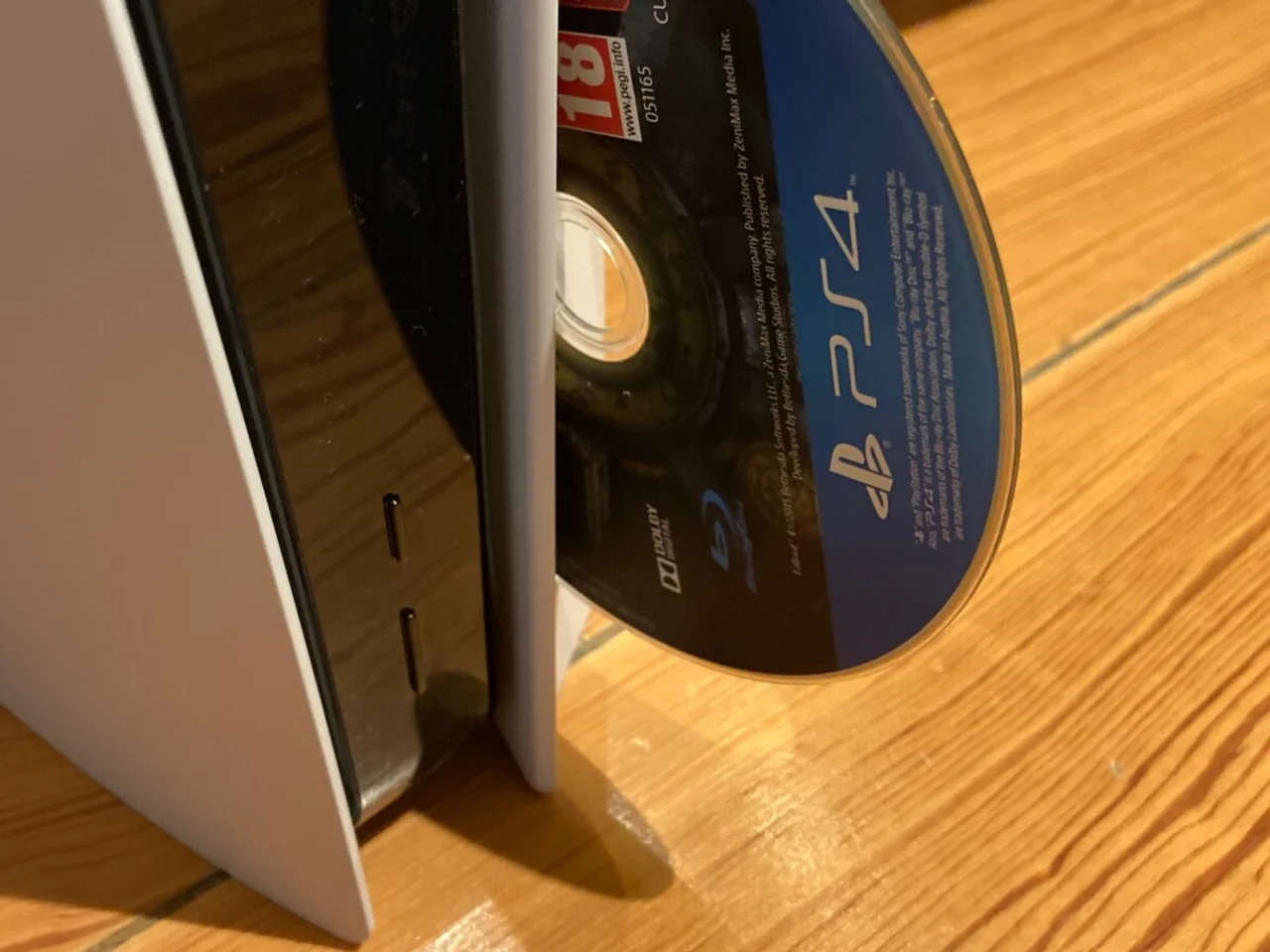
This illustrative photograph shows a PS5 optical drive with a PS4 disc, not PS5SX2 running a PlayStation 2 game.
Not Every Old Disc Is Compatible
There is an important hardware limitation.
PlayStation 2 games were distributed on both DVDs and CDs.
The PS5's internal optical drive cannot read standard CDs.
That excludes direct reading of CD-based PS2 games through the built-in drive.
Compatible PS2 DVDs can be used with the emulator on a modified console.
The developer also documents external storage and drive options.
However, recognizing a disc is not the same as guaranteeing that its game will run correctly.
Actual results depend on compatibility with the emulator.
Sharper Games on 4K Displays
PS5SX2 is not restricted to reproducing the original image resolution of early-2000s televisions.
The emulator supports rendering at multiples of the PS2's native resolution.
Its output can be scaled for modern 4K displays.
Filters including FSR are also available.
Version 2.15 adds another 192 texture packs to an accessible community collection.
Those files can replace older textures with higher-resolution alternatives.
However, improvements depend on the individual game and the available packs.
Emulation does not automatically transform every PS2 title into a complete modern remaster.
Features Inherited From PCSX2
The port retains several capabilities associated with PCSX2 on computers.
These include save states, virtual memory cards and extensive graphics settings.
Certain games support patches for widescreen output or improved frame rates.
Experimental network emulation can allow selected games to connect to community-run services.
PS5SX2 also features a cover-based game library.
Version 2.15 enhances this presentation with additional artwork and improved searching.
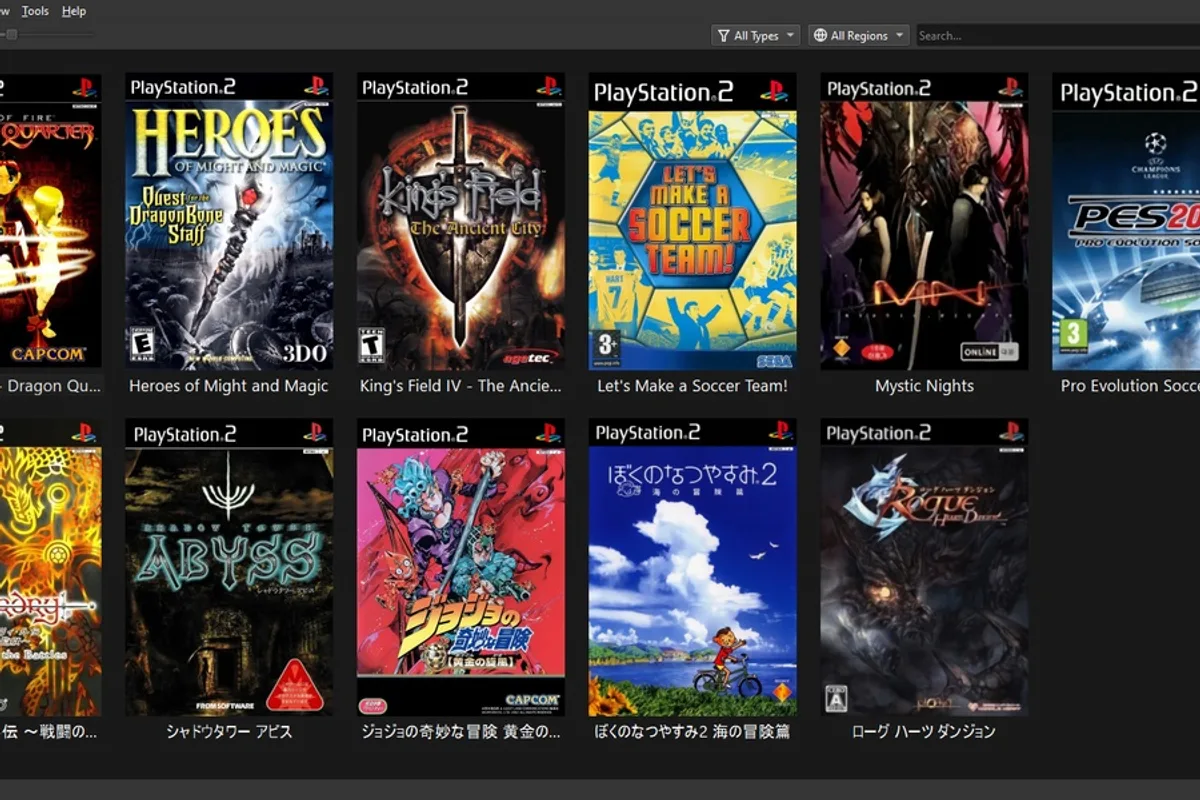
This illustrative image shows PCSX2's Windows library interface, not the native PS5SX2 application.
A Modified PS5 Is Still Required
This remains the most important qualification for ordinary PlayStation owners.
PS5SX2 cannot be installed through the PlayStation Store.
It requires a console capable of executing unofficial software and several community-developed supporting components.
Users must also supply their own PlayStation 2 BIOS and games.
The project does not include commercial games or Sony BIOS files.
Console modification can involve stability issues, service restrictions and warranty complications.
It should not be presented as an ordinary update available to every PS5 owner.
What About PlayStation 3 Games?
Community research is also extending toward PlayStation 3 emulation.
Developers have experimented with adaptations of RPCS3 for PlayStation 5 hardware.
An unofficial PS3 demonstration on PS5 Pro has been reported.
However, the official RPCS3 team is not developing a native PS5 release.
Current experiments are not a stable public solution capable of running the complete PS3 catalog.
They also do not represent an announcement of official Sony backward compatibility.
A Demonstration of the Hardware's Potential
PS5SX2 raises an interesting question: how far can console hardware be extended when independent developers gain sufficient access to it?
Version 2.15 suggests the project is moving beyond isolated technical demonstrations.
Its developer is improving everyday usability through shortcuts, cover artwork, disc access and graphics customization.
Compatibility remains incomplete, and a modified console is essential.
Nevertheless, the project is significant from a game preservation perspective.
It demonstrates how modern hardware may extend the life of older software, even when the manufacturer does not officially provide that particular capability.