
News News Official
Tomb Raider: Legacy of Atlantis Wants Players to Get Lost Again
In the original Tomb Raider, an unfamiliar room could keep players occupied for quite some time. There was not always a glowing path showing which ledge to reach or which mechanism to activate. Crystal Dynamics wants to recover that sensation in Tomb Raider: Legacy of Atlantis. In comments reported by GamesRadar+ in October 2026, the developers explain their intention to preserve the memorable moments of 1996 while modernizing movement, combat and environments. It is an approach that could make exploration the center of the experience once again.
 By Maëlle Tomb Raider: Legacy of Atlantis
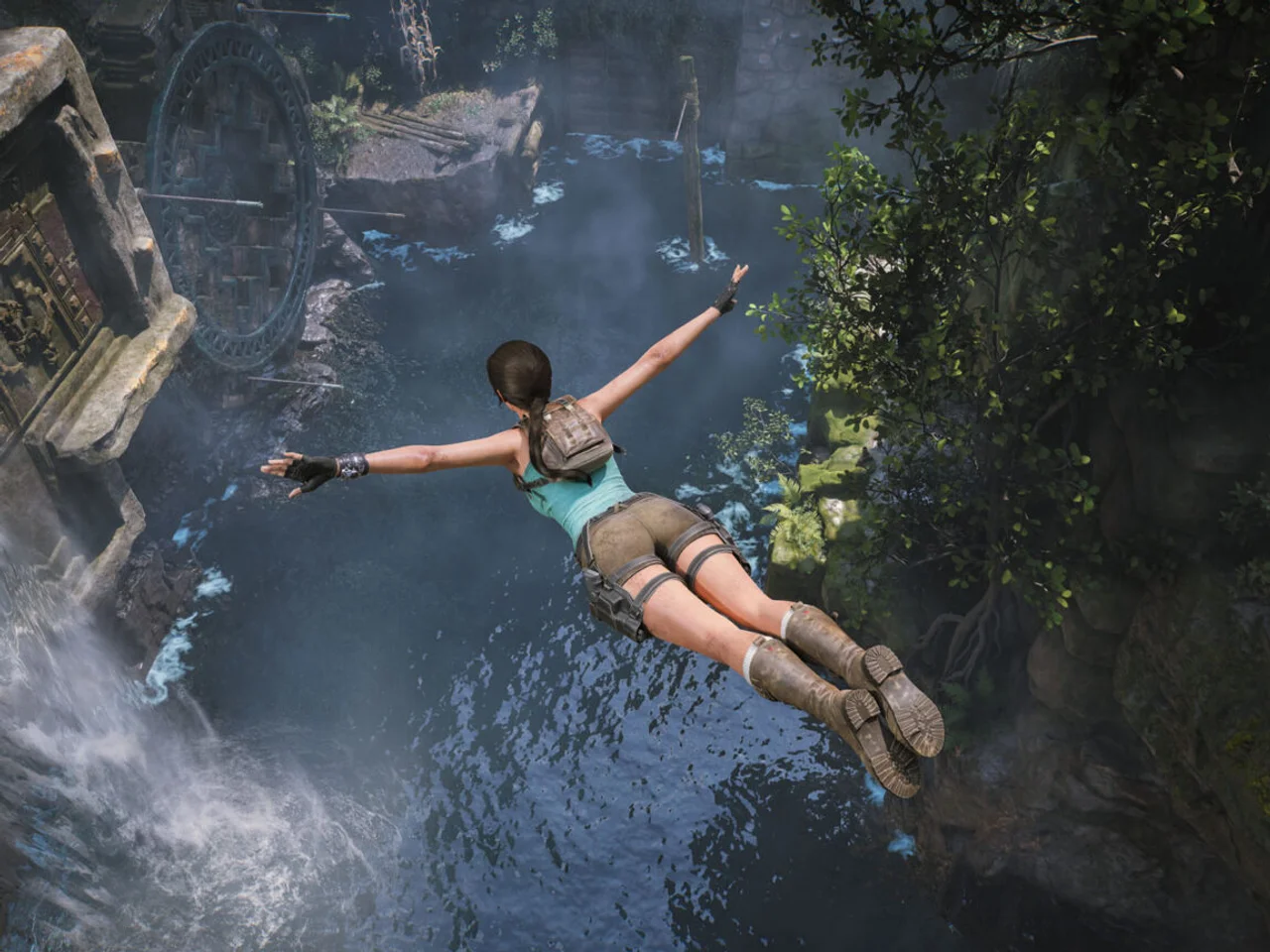
Lara Croft Will Need to Find Her Own Way
Getting lost in a videogame is not necessarily a design failure. When environments are built to be observed and understood, disorientation can become part of the enjoyment.
That is the idea Crystal Dynamics wants to revisit in Tomb Raider: Legacy of Atlantis.
In an Edge interview highlighted by GamesRadar+, experience director Jeff Adams argues for an adventure that does not constantly direct players toward the next objective.
He wants them to explore beyond the obvious route, discover unexpected details and eventually understand how to find their way back.
The reward is not limited to the treasure waiting at the end of a tomb. It also comes from understanding the space and solving the route yourself.
For a franchise that helped define three-dimensional exploration, that philosophy makes sense.
However, the goal is not to reproduce every technical frustration of the 1990s. The developers want to preserve the feeling of adventure through modern movement and navigation systems.
Preserving Memories Rather Than Exact Level Layouts
Questions of faithfulness are inevitable when rebuilding a game as influential as the original Tomb Raider.
Should every room be reproduced? Should enemies occupy their original positions? Should every object and trap remain exactly where it was?
Flying Wild Hog is approaching the problem differently.
Creative director Michael Kuk explains that the team wants to identify what players remember most strongly after completing the 1996 adventure.
Certain vistas, objects and events can become inseparable from the experience, regardless of how much time players spent with them.
Those are the moments the developers want to preserve.
The surrounding level structure can therefore change without losing the identity of the original encounter.
That helps explain why the project is described as a reimagining.
Legacy of Atlantis should not be confused with a remaster of the original or another edition of Tomb Raider: Anniversary.
The Lost Valley Demonstrates the Approach
The clearest example comes from Peru.
The Lost Valley appeared in a playable demonstration at Summer Game Fest 2026.
PlayStation Blog contributor Phil Hornshaw tried a section featuring a redesigned version of the classic cog puzzle.
Lara must recover two components to reactivate a mechanism connected to a waterfall.
The first cog is relatively easy to discover. Finding the second requires more exploration and an understanding of the environment's different routes.
The basic mechanism evokes the original adventure, but the surrounding location has been completely reorganized.
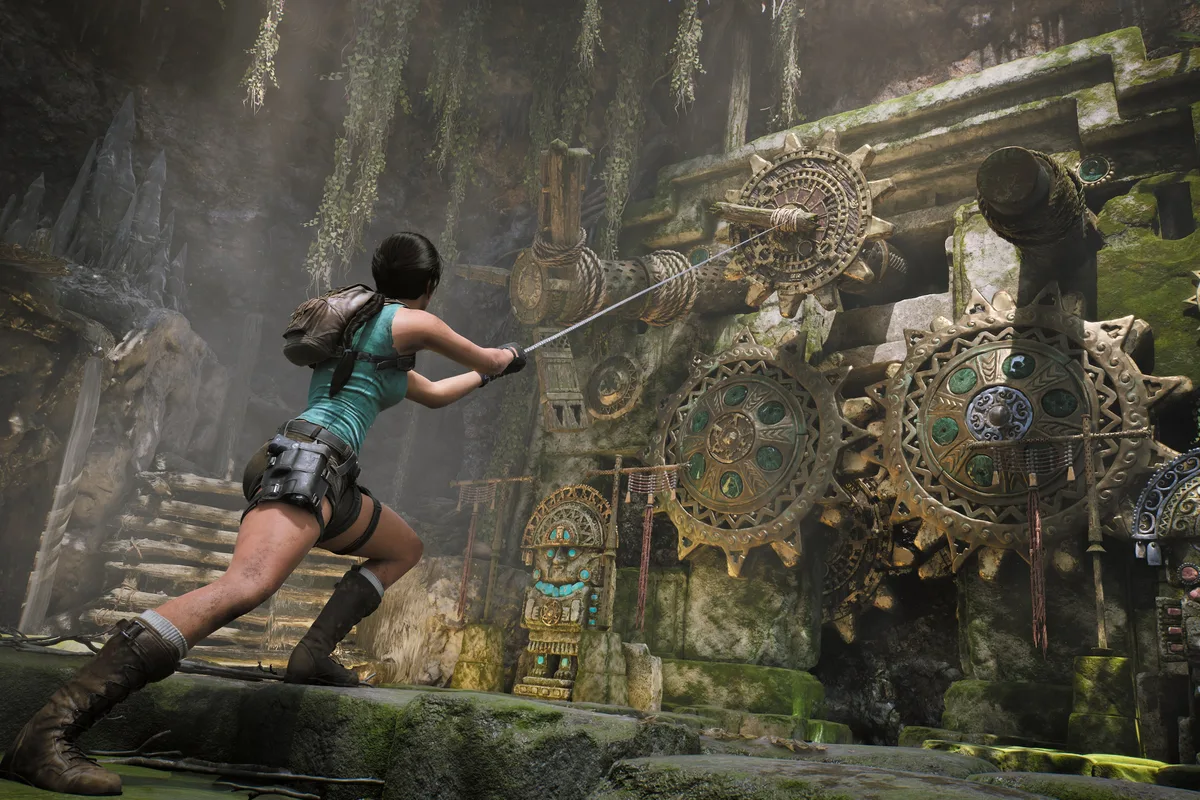
Instead of isolated rooms connected by narrow corridors, the level uses more open spaces with different elevations and multiple approaches.
The PlayStation Blog preview also notes that the game provides little immediate guidance about the missing component.
Environmental observation is therefore central to progression.
It is exactly the kind of discovery-driven gameplay the developers say they want to emphasize.
Less Hand-Holding Does Not Mean Removing Every Hint
An important distinction is necessary.
Crystal Dynamics' intention to reduce constant guidance does not mean Tomb Raider: Legacy of Atlantis will eliminate all assistance.
In the PlayStation Blog preview, Crystal Dynamics game director Raul Siqueira explains that players will be able to adjust certain guidance options.
The game also supports separate difficulty settings for puzzles and combat.
Someone who enjoys complex environmental challenges but prefers easier encounters should not have to use one universal difficulty setting.
Conversely, players seeking a minimally guided adventure can pursue that experience.
The success of this system will depend on the finished game.
It remains to be seen whether guidance is restrained enough to preserve discovery while still helping players who need additional support.
Lara Gets Her Acrobatics and Dual Pistols Back
The reimagining extends beyond puzzles.
Crystal Dynamics and Flying Wild Hog want to present a Lara Croft closer to the capable adventurer of the classic series.
That distinguishes her from the inexperienced survivor introduced in the 2013 reboot.
In playable demonstrations, Lara uses her iconic dual pistols and combines combat with acrobatic movement.
She can roll, dive and dodge to avoid incoming attacks.
The developers have also introduced the Focus system.
Once enough Focus has been accumulated, Lara can perform an acrobatic maneuver while time briefly slows.
This allows players to maintain accuracy during certain movements.
The mechanic was already documented in June, so it is not a new October announcement.
Its importance lies in making Lara's mobility a continuous part of combat rather than something that stops when fighting begins.
The T-Rex Was Never Going to Disappear
Some memories from the original adventure are almost impossible to remove.
The Lost Valley's tyrannosaurus rex is an obvious example.
The encounter has been confirmed and demonstrated to the press.
The June preview included a chase sequence requiring Lara to react quickly to environmental hazards.
The presentation is therefore not a direct reproduction of the 1996 version.
However, the underlying idea remains recognizable: an explorer entering a forgotten location suddenly encounters a creature that should not exist there.
The sequence illustrates the distinction between emotional faithfulness and technical reproduction.
The memory of danger remains, while its presentation changes.
More Believable Tombs, With Crafting Added
Another modernization decision may prove more divisive among longtime fans.
Legacy of Atlantis includes a system for crafting healing items and other upgrades.
Jeff Adams explains the decision partly through environmental believability.
Finding perfectly preserved medical supplies inside tombs sealed for thousands of years is difficult to reconcile with the more realistic visual presentation.
The developers therefore want Lara to make use of materials found during exploration.
The reasoning is understandable, but it creates a question.
Will crafting meaningfully contribute to the adventure, or add unnecessary management to a formula that originally worked without it?
The answer will depend on how much attention the system requires.
For now, the presentations establish its existence, not its eventual success.
Environments Have Been Rebuilt
The teams have redesigned more than the Lost Valley.
Different stages of Lara's journey have received substantial environmental changes.
In Peru, the ruins and passageways are being developed as more coherent spaces.
In Greece, the developers are emphasizing the monumental scale of ancient structures.
Egyptian locations gradually reinforce the supernatural elements of the adventure.
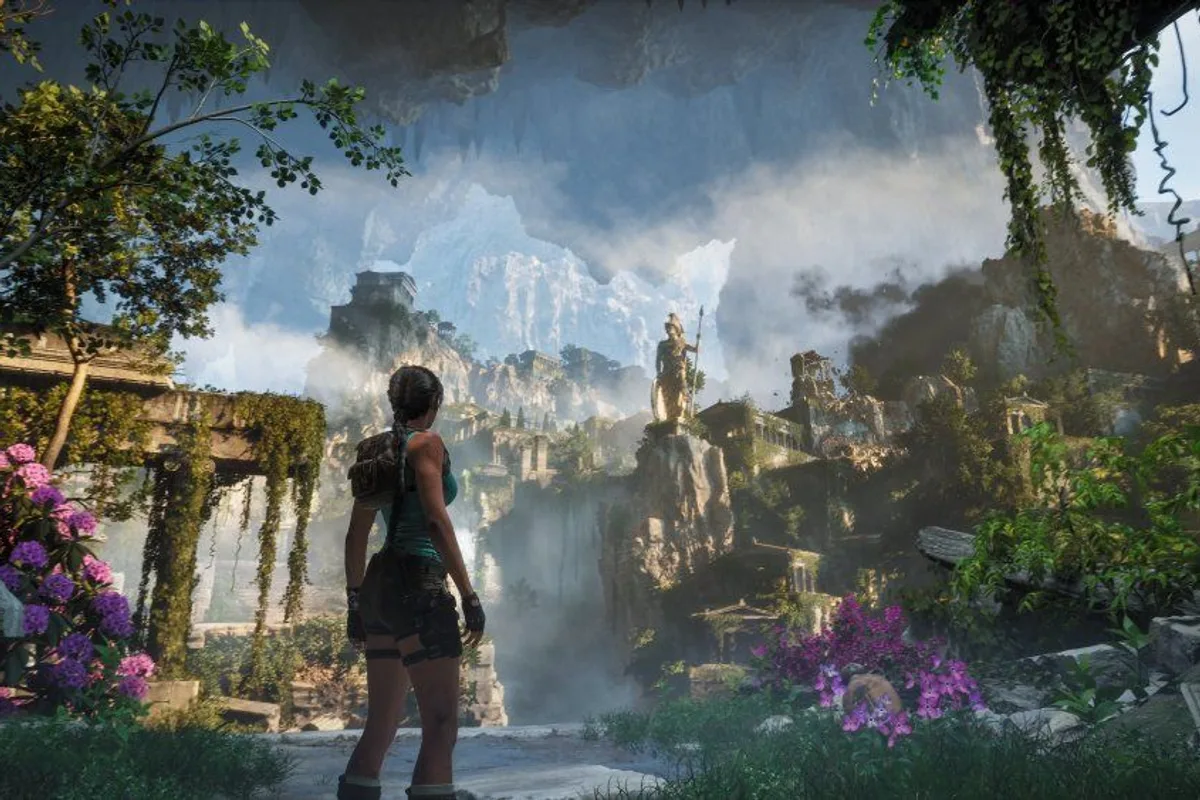
Unreal Engine 5 enables significantly more detailed architecture than the original game could display.
However, the developers do not describe the redesign as a purely graphical improvement.
They want environmental structure to shape progression, giving players opportunities to discover new paths and understand locations from different perspectives.
That philosophy will need to prove itself across the full adventure.
A larger area is not automatically more rewarding to explore. It still needs enough internal logic to make observation worthwhile.
Tomb Raider: Legacy of Atlantis Is Coming in February 2027
Tomb Raider: Legacy of Atlantis is scheduled for February 12, 2027, on PC, PlayStation 5, Xbox Series X|S and Nintendo Switch 2.
It is being developed by Crystal Dynamics and Flying Wild Hog, with Amazon Game Studios publishing.
Preorders are available, but the game has not yet launched.
Hands-on previews and developer interviews therefore reveal intentions and selected playable systems without providing a complete assessment of the finished release.
Still, there is a compelling idea behind Crystal Dynamics' approach.
The original Tomb Raider's legacy is not limited to its pistols, dinosaurs or ancient temples.
It also lies in the moment Lara enters an unfamiliar place and the player must work out what to do.
If Legacy of Atlantis can recover that sensation without restoring the technical limitations of 1996, it may honor its inspiration through more than a collection of nostalgic references.